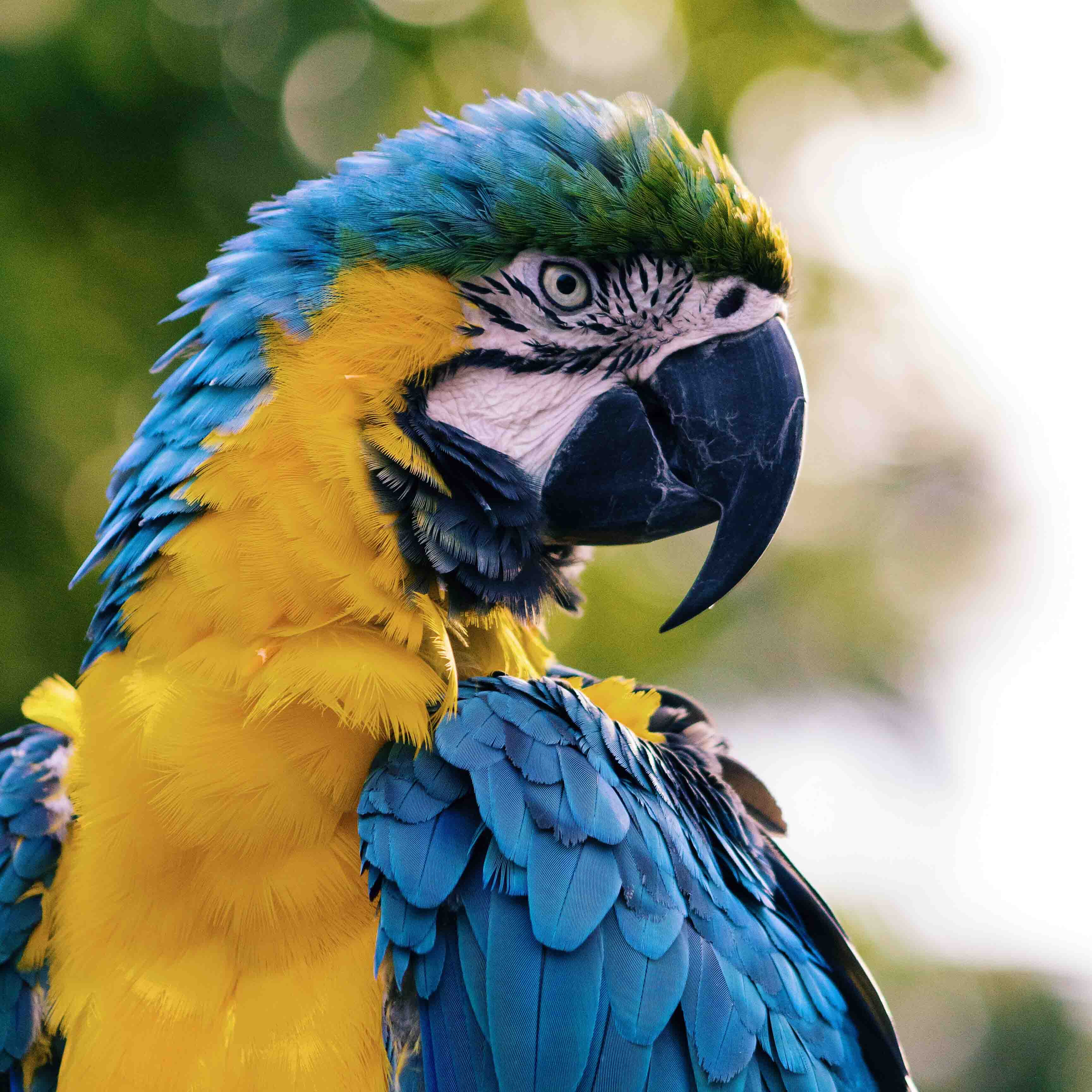
Blue and Yellow Macaw
Population: 1
Diet: Herbivore
Basic: Parrot seed mix without peanuts (50%).
Basic: Masourri parrot pellet (50%).
Treats: Offer nuts for treats, such as macadamias, walnuts, pecans, almounds and filberts.
Supplement: its such as apples, pears, plums, cherries, grapes, oranges, bananas, mangos, papayas, and even berries such as strawberries and blueberries are enjoyed. Many vegetables including carrots, sweet potatoes, cucumbers, zucchini, dark green leafy veggies, many garden vegetables, and even dandelions and chickweed.
Do not feed: Do not feed avocado as it may be toxic to birds!
Feeding
In the morning the parrots get special food for birds. The food is e mixture of different seeds and lump. Every day they get a full tray of the daybefore needs to be thrown away (in the garden for the peacocks and chickens). Most parrots are omnivores so a food diet is essential, the mixture include all nutrients if it is special for parrots. Parrots enjoy eating some fresh food in additional. The food needs to be given in different was, each parrot likes it in another way (on the ground or handing). The water needs to be freshened every day in the morning, also the bathing tub.
Notes
• Feed daily, basic food misture and supplements at least 3 times a week.
• Provide perch and toys to prevent stress.
• Provide fresh water daily.
• Cleans from parasites quarterly.
Maintenance
Wings The wings should be kept trim. Clip most of the primates (10 feathers closest to the wing tip) and only enough so the bird can glide to the floor.
Beak The beak needs to be trimmed if it becomes overgrown or deformed. There are many mineral blocks, lava blocks, and other beak grooming items available.
Nails A variety of concrete type perches are also available to help the keep nails trim, but they should be trimmed if they become overgrown.
Notes
• Feed daily, basic food misture and supplements at least 3 times a week.
• Provide perch and toys to prevent stress.
• Provide fresh water daily.
• Cleans from parasites quarterly.
Housing
The basic cage care includes daily cleaning of the water and food dishes. Weekly wash all the perches and dirty toys. The floor should be wased about every other week. A total housing down and disinfecting of an avary should be done yearly. Replace anything that needs to be freshened such as old dishes, toys and perches.
Notes
• Feed daily, basic food misture and supplements at least 3 times a week.
• Provide perch and toys to prevent stress.
• Provide fresh water daily.
• Cleans from parasites quarterly.
Red Flags
Ruffled plumage.
Listlessness.
Drooping wings.
Sagging body.
Extreme mood changes.
Having no appetite.
Bulges in feathering.
Partially closed or watery eyes.
Swelling of the eyelids.
Rasping.
Difficulty breathing.
Excessive saliva.
Dirty vent.
Any change in the faces not apparently diet related.
Notes
• Feed daily, basic food misture and supplements at least 3 times a week.
• Provide perch and toys to prevent stress.
• Provide fresh water daily.
• Cleans from parasites quarterly.